KSA has been working with XRD instrumentation and software for over 30 years and has witnessed firsthand the rapid expansion of analysis capabilities brought on by new software over that time. Techniques once considered too advanced for anyone outside a synchrotron facility are now commonplace, even for users of benchtop XRD systems.
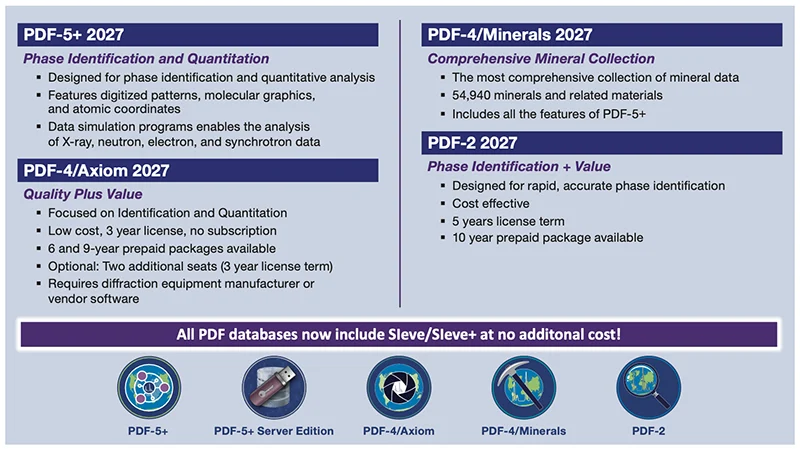
Part of that advancement has been the consistent collection, curation, and cataloguing of XRD structure information for hundreds of thousands of materials. ICDD has led the way with the best organized and most carefully reviewed data available. These are compiled into various databases from the flagship PDF-5+ to more focused selections like the PDF-4/Minerals subfile.
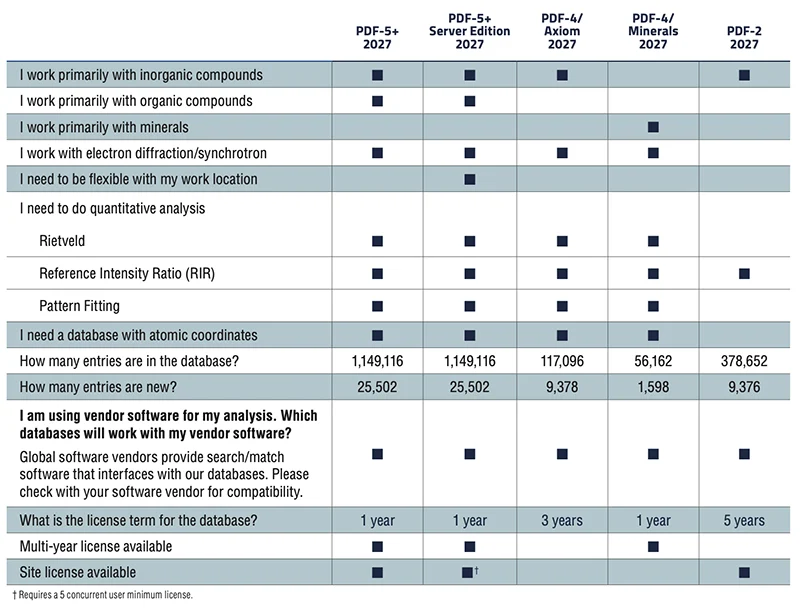
We’re always happy to discuss these options via email or phone, but ICDD provides some useful comparison information to help as well.
Often the questions come down to:
- What types of samples are you analyzing?
- What type of information are you hoping to gain from XRD?
- What software will you be using?
Contact us if you’re uncertain or just want to talk through the options before making a choice. The following information from ICDD should help start the conversation.